

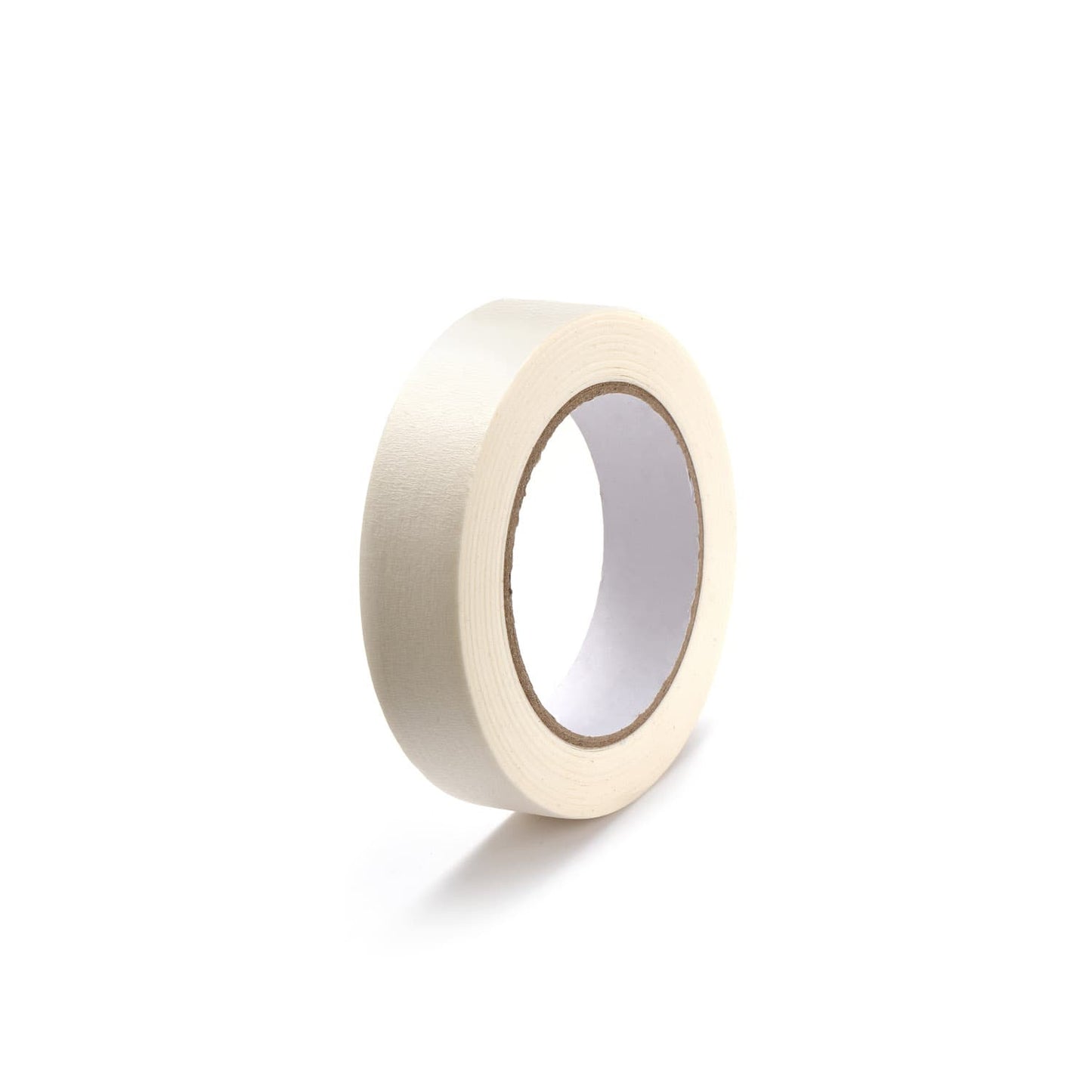
Select Size
| Part No. | Width (mm) | Length (m) | Qty/Pack | Color | Price | Order Qty | Add to Cart | |
|---|---|---|---|---|---|---|---|---|
| CT-005 | 5.00 | 33 | 60 | Beige | $19.94 |
|
||
| CT-010 | 10.00 | 33 | 30 | Beige | $42.64 |
|
||
| CT-020 | 20.00 | 33 | 15 | Beige | $42.64 |
|
||
| CT-025 | 25.00 | 33 | 12 | Beige | $42.64 |
|
||
| CT-030 | 30.00 | 33 | 10 | Beige | $42.64 |
|
||
| CT-050 | 50.00 | 33 | 6 | Beige | $42.64 |
|
Can't find the specification you are looking for?

Which masking tape material should I choose for my specific finishing process?
The choice depends on your process temperature and mechanical stress. Polyester (PET) tapes are the industry standard for powder coating and e-coating, withstanding up to 400°F (204°C). For extreme heat applications like specialized powder coating or wave soldering, Polyimide (Kapton) tapes offer resistance up to 500°F (260°C). If your process involves heavy abrasion, such as sandblasting or thermal spray, Glass Cloth tapes provide the necessary mechanical strength and withstand up to 500°F (260°C).
What type of adhesive is best for high-temperature masking?
For high-temperature applications like powder coating and anodizing, silicone adhesives are superior. Unlike rubber or acrylic adhesives which can break down and leave residue above 300°F, silicone adhesives maintain their integrity up to 500°F (260°C) and ensure clean removal. All of our high-temperature masking tapes feature premium silicone adhesives to prevent post-process cleanup.
How can I prevent adhesive residue from being left on my parts after masking?
Adhesive residue is typically caused by exceeding the tape's temperature limit, leaving the tape on the part for too long after curing, or using the wrong adhesive type. To prevent residue, always select a tape rated for your specific oven temperature, remove the tape while the part is still warm (but not hot) to the touch, and ensure the surface is completely clean and dry before application.
When should I use masking tape versus die-cut shapes?
Masking tapes are ideal for straight lines, large flat surfaces, or masking off irregular, one-off shapes where flexibility is needed. However, if you are masking the same specific shape (like a grounding pad or a flange) repeatedly in high volumes, Die-Cut masking shapes are far more efficient. Die-cuts eliminate manual cutting, ensure consistent masking lines, and significantly reduce labor time in series production.